Bard
All classes · Multiclassing · Rules Glossary
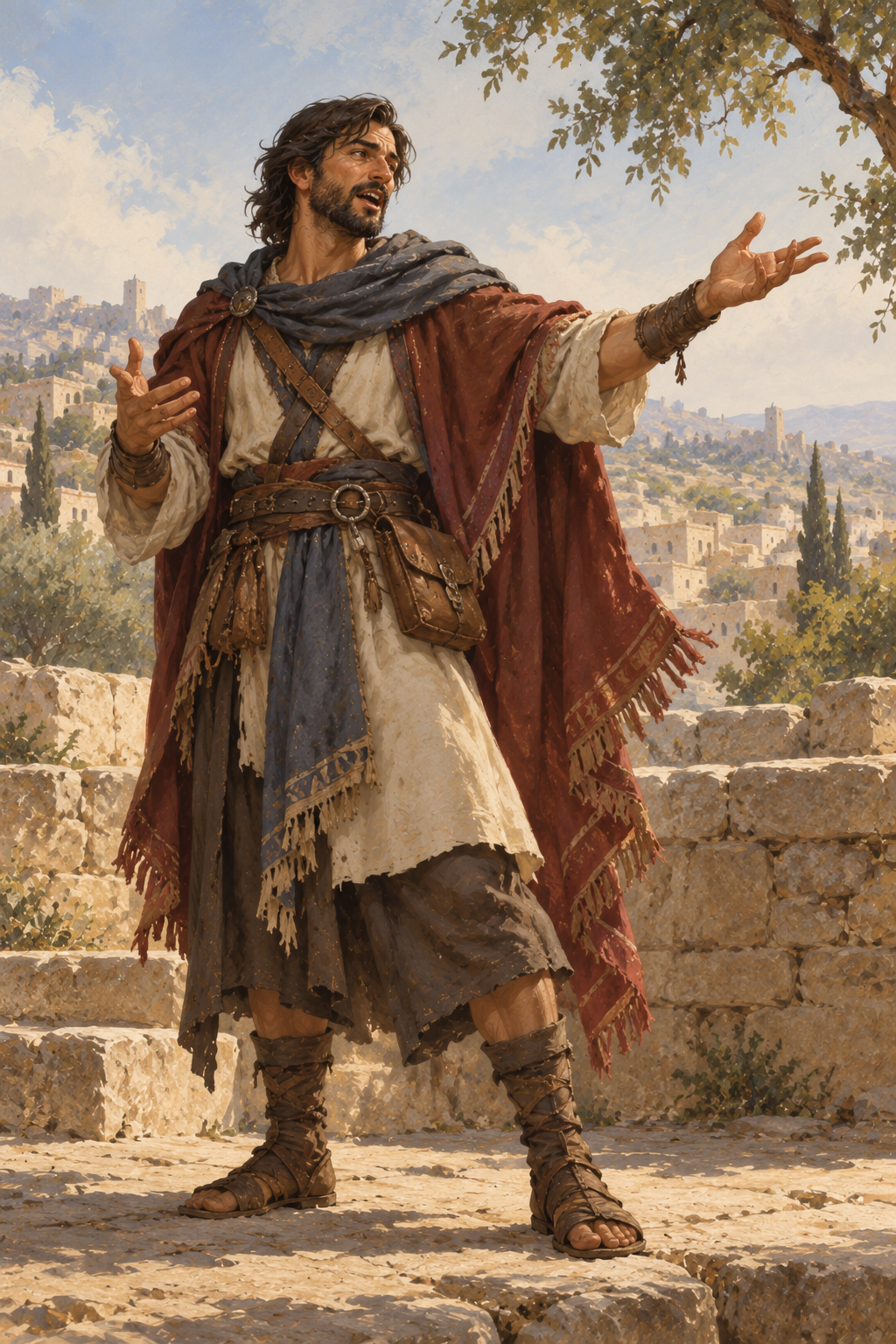
Core Bard Traits
| Primary Ability | Charisma |
|---|---|
| Hit Point Die | D8 per Bard level |
| Saving Throw Proficiencies | Dexterity and Charisma |
| Skill Proficiencies | Choose any 3 skills (see chapter 1) |
| Weapon Proficiencies | Simple weapons |
| Tool Proficiencies | Choose 3 Musical Instruments (see chapter 6) |
| Armor Training | Light armor |
| Starting Equipment | Choose A or B: (A) Leather Armor, 2 Daggers, Musical Instrument of your choice, Entertainer's Pack, and 19 GP; or (B) 90 GP |
Becoming a Bard ...
As a Level 1 Character
- Gain all the traits in the Core Bard Traits table.
- Gain the Bard's level 1 features, which are listed in the Bard Features table.
As a Multiclass Character
- Gain the following traits from the Core Bard Traits table: Hit Point Die, proficiency in one skill of your choice, proficiency with one Musical Instrument of your choice, and training with Light armor.
- Gain the Bard's level 1 features, which are listed in the Bard Features table. See the multiclassing rules in "Character Creation" to determine your available spell slots.
Bard Class Features
As a Bard, you gain the following class features when you reach the specified Bard levels. These features are listed in the Bard Features table.
Bard Features
| Level | Proficiency Bonus | Class Features | Bardic Die |
|---|---|---|---|
| 1 | +2 | Bardic Inspiration, Spellcasting | D6 |
| 2 | +2 | Expertise,Jack of All Trades | D6 |
| 3 | +2 | Bard Subclass | D6 |
| 4 | +2 | Ability Score Improvement | D6 |
| 5 | +3 | Font of Inspiration | D8 |
| 6 | +3 | Subclass feature | D8 |
| 7 | +3 | Countercharm | D8 |
| 8 | +3 | Ability Score Improvement | D8 |
| 9 | +4 | Expertise | D8 |
| 10 | +4 | Magical Secrets | D10 |
| 11 | +4 | - | D10 |
| 12 | +4 | Ability Score Improvement | D10 |
| 13 | +5 | - | D10 |
| 14 | +5 | Subclass feature | D10 |
| 15 | +5 | - | D12 |
| 16 | +5 | Ability Score Improvement | D12 |
| 17 | +6 | - | D12 |
| 18 | +6 | Superior Inspiration | D12 |
| 19 | +6 | Epic Boon | D12 |
| 20 | +6 | Words of Creation | D12 |
| --Spell Slots per Spell Level-- | |||||||||||
|---|---|---|---|---|---|---|---|---|---|---|---|
| Level | Cantrips | Prepared Spells | 1 | 2 | 3 | 4 | 5 | 6 | 7 | 8 | 9 |
| 1 | 2 | 4 | 2 | - | - | - | - | - | - | - | - |
| 2 | 2 | 5 | 3 | - | - | - | - | - | - | - | - |
| 3 | 2 | 6 | 4 | 2 | - | - | - | - | - | - | - |
| 4 | 3 | 7 | 4 | 3 | - | - | - | - | - | - | - |
| 5 | 3 | 9 | 4 | 3 | 2 | - | - | - | - | - | - |
| 6 | 3 | 10 | 4 | 3 | 3 | - | - | - | - | - | - |
| 7 | 3 | 11 | 4 | 3 | 3 | 1 | - | - | - | - | - |
| 8 | 3 | 12 | 4 | 3 | 3 | 2 | - | - | - | - | - |
| 9 | 3 | 14 | 4 | 3 | 3 | 3 | 1 | - | - | - | - |
| 10 | 4 | 15 | 4 | 3 | 3 | 3 | 2 | - | - | - | - |
| 11 | 4 | 16 | 4 | 3 | 3 | 3 | 2 | 1 | - | - | - |
| 12 | 4 | 16 | 4 | 3 | 3 | 3 | 2 | 1 | - | - | - |
| 13 | 4 | 17 | 4 | 3 | 3 | 3 | 2 | 1 | 1 | - | - |
| 14 | 4 | 17 | 4 | 3 | 3 | 3 | 2 | 1 | 1 | - | - |
| 15 | 4 | 18 | 4 | 3 | 3 | 3 | 2 | 1 | 1 | 1 | - |
| 16 | 4 | 18 | 4 | 3 | 3 | 3 | 2 | 1 | 1 | 1 | - |
| 17 | 4 | 19 | 4 | 3 | 3 | 3 | 2 | 1 | 1 | 1 | 1 |
| 18 | 4 | 20 | 4 | 3 | 3 | 3 | 3 | 1 | 1 | 1 | 1 |
| 19 | 4 | 21 | 4 | 3 | 3 | 3 | 3 | 2 | 1 | 1 | 1 |
| 20 | 4 | 22 | 4 | 3 | 3 | 3 | 3 | 2 | 2 | 1 | 1 |
Level 1: Bardic Inspiration
You can supernaturally inspire others through words, music, or dance. This inspiration is represented by your Bardic Inspiration die, which is a d6.
Using Bardic Inspiration. As a Bonus Action, you can inspire another creature within 60 feet of yourself who can see or hear you. That creature gains one of your Bardic Inspiration dice. A creature can have only one Bardic Inspiration die at a time.
Once within the next hour when the creature fails a D20 Test, the creature can roll the Bardic Inspiration die and add the number rolled to the d20, potentially turning the failure into a success. A Bardic Inspiration die is expended when it's rolled.
Number of Uses. You can confer a Bardic Inspiration die a number of times equal to your Charisma modifier (minimum of once), and you regain all expended uses when you finish a Long Rest.
At Higher Levels. Your Bardic Inspiration die changes when you reach certain Bard levels, as shown in the Bardic Die column of the Bard Features table. The die becomes a d8 at level 5, a d10 at level 10, and a d12 at level 15.
Level 1: Spellcasting
You have learned to cast spells through your bardic arts. See "Spells" for the rules on spellcasting. The information below details how you use those rules with Bard spells, which appear in the Bard spell list later in the class's description.
Cantrips. You know two cantrips of your choice from the Bard spell list. Dancing Lights and Vicious Mockery are recommended.
Whenever you gain a Bard level, you can replace one of your cantrips with another cantrip of your choice from the Bard spell list.
When you reach Bard levels 4 and 10, you learn another cantrip of your choice from the Bard spell list, as shown in the Cantrips column of the Bard Features table.
Spell Slots. The Bard Features table shows how many spell slots you have to cast your level 1+ spells. You regain all expended slots when you finish a Long Rest.
Prepared Spells of Level 1+. You prepare the list of level 1+ spells that are available for you to cast with this feature. To start, choose four level 1 spells from the Bard spell list. Charm Person , Color Spray ,Dissonant Whispers , and Healing Word are recommended.
The number of spells on your list increases as you gain Bard levels, as shown in the Prepared Spells column of the Bard Features table. Whenever that number increases, choose additional spells from the Bard spell list until the number of spells on your list matches the number on the table. The chosen spells must be of a level for which you have spell slots.
For example, if you're a level 3 Bard, your list of prepared spells can include six spells of levels 1 and 2 in any combination.
If another Bard feature gives you spells that you always have prepared, those spells don't count against the number of spells you can prepare with this feature, but those spells otherwise count as Bard spells for you.
Changing Your Prepared Spells. Whenever you gain a Bard level, you can replace one spell on your list with another Bard spell for which you have spell slots.
Spellcasting Ability. Charisma is your spellcasting ability for your Bard spells.
Spellcasting Focus. You can use a Musical Instrument as a Spellcasting Focus for your Bard spells.
Level 2: Expertise
You gain Expertise (see "Rules Glossary") in two of your skill proficiencies of your choice. Performance and Persuasion are recommended if you have proficiency in them.
At Bard level 9, you gain Expertise in two more of your skill proficiencies of your choice.
Level 2: Jack of All Trades
You can add half your Proficiency Bonus (round down) to any ability check you make that uses a skill proficiency you lack and that doesn't otherwise use your Proficiency Bonus.
For example, if you make a Strength (Athletics) check and lack Athletics proficiency, you can add half your Proficiency Bonus to the check.
Level 3: Bard Subclass
You gain a Bard subclass of your choice. The College of Lore subclass is detailed after this class's description. A subclass is a specialization that grants you features at certain Bard levels. For the rest of your career, you gain each of your subclass's features that are of your Bard level or lower.
Level 4: Ability Score Improvement
You gain the Ability Score Improvement feat (see "Feats") or another feat of your choice for which you qualify. You gain this feature again at Bard levels 8, 12, and 16.
Level 5: Font of Inspiration
You now regain all your expended uses of Bardic Inspiration when you finish a Short or Long Rest.
In addition, you can expend a spell slot (no action required) to regain one expended use of Bardic Inspiration.
Level 7: Countercharm
You can use musical notes or words of power to disrupt mind-influencing effects. If you or a creature within 30 feet of you fails a saving throw against an effect that applies the Charmed or Frightened condition, you can take a Reaction to cause the save to be rerolled, and the new roll has Advantage.
Level 10: Magical Secrets
You've learned secrets from various magical traditions. Whenever you reach a Bard level (including this level) and the Prepared Spells number in the Bard Features table increases, you can choose any of your new prepared spells from the Bard, Cleric, Druid, and Wizard spell lists, and the chosen spells count as Bard spells for you (see a class's section for its spell list). In addition, whenever you replace a spell prepared for this class, you can replace it with a spell from those lists.
Level 18: Superior Inspiration
When you roll Initiative, you regain expended uses of Bardic Inspiration until you have two if you have fewer than that.
Level 19: Epic Boon
You gain an Epic Boon feat (see "Feats") or another feat of your choice for which you qualify. Boon of Spell Recall is recommended.
Level 20: Words of Creation
You have mastered two of the Words of Creation: the words of life and death. You therefore always have the Power Word Heal and Power Word Kill spells prepared. When you cast either spell, you can target a second creature with it if that creature is within 10 feet of the first target.
Bard Spell List
This section presents the Bard spell list. The spells are organized by spell level and then alphabetized, and each spell's school of magic is listed. In the Special column, C means the spell requires Concentration, R means it's a Ritual, and M means it requires a specific Material component.
Cantrips (Level 0 Bard Spells)
| Spell | School | Special |
|---|---|---|
| Dancing Lights | Illusion | C |
| Light | Evocation | - |
| Mage Hand | Conjuration | - |
| Mending | Transmutation | - |
| Message | Transmutation | - |
| Minor Illusion | Illusion | - |
| Prestidigitation | Transmutation | - |
| Starry Wisp | Evocation | - |
| True Strike | Divination | - |
| Vicious Mockery | Enchantment | - |
Level 1 Bard Spells
| Spell | School | Special |
|---|---|---|
| Animal Friendship | Enchantment | - |
| Bane | Enchantment | C |
| Charm Person | Enchantment | - |
| Color Spray | Illusion | - |
| Command | Enchantment | - |
| Comprehend Languages | Divination | R |
| Cure Wounds | Abjuration | - |
| Detect Magic | Divination | C, R |
| Disguise Self | Illusion | - |
| Dissonant Whispers | Enchantment | - |
| Faerie Fire | Evocation | C |
| Feather Fall | Transmutation | - |
| Healing Word | Abjuration | - |
| Heroism | Enchantment | C |
| Hideous Laughter | Enchantment | C |
| Identify | Divination | R, M |
| Illusory Script | Illusion | R, M |
| Longstrider | Transmutation | - |
| Silent Image | Illusion | C |
| Sleep | Enchantment | C |
| Speak with Animals | Divination | R |
| Thunderwave | Evocation | - |
| Unseen Servant | Conjuration | R |
Level 2 Bard Spells
| Spell | School | Special |
|---|---|---|
| Aid | Abjuration | - |
| Animal Messenger | Enchantment | R |
| Blindness/Deafness | Transmutation | - |
| Calm Emotions | Enchantment | C |
| Detect Thoughts | Divination | C |
| Enhance Ability | Transmutation | C |
| Enlarge/Reduce | Transmutation | C |
| Enthrall | Enchantment | C |
| Heat Metal | Transmutation | C |
| Hold Person | Enchantment | C |
| Invisibility | Illusion | C |
| Knock | Transmutation | - |
| Lesser Restoration | Abjuration | - |
| Locate Animals or Plants | Divination | R |
| Locate Object | Divination | C |
| Magic Mouth | Illusion | R, M |
| Mirror Image | Illusion | - |
| See Invisibility | Divination | - |
| Shatter | Evocation | - |
| Silence | Illusion | C, R |
| Suggestion | Enchantment | C |
| Zone of Truth | Enchantment | - |
Level 3 Bard Spells
| Spell | School | Special |
|---|---|---|
| Bestow Curse | Necromancy | C |
| Clairvoyance | Divination | C, M |
| Dispel Magic | Abjuration | - |
| Fear | Illusion | C |
| Glyph of Warding | Abjuration | M |
| Hypnotic Pattern | Illusion | C |
| Major Image | Illusion | C |
| Mass Healing Word | Abjuration | - |
| Nondetection | Abjuration | M |
| Plant Growth | Transmutation | - |
| Sending | Divination | - |
| Slow | Transmutation | C |
| Speak with Dead | Necromancy | - |
| Speak with Plants | Transmutation | - |
| Stinking Cloud | Conjuration | C |
| Tiny Hut | Evocation | R |
| Tongues | Divination | - |
Level 4 Bard Spells
| Spell | School | Special |
|---|---|---|
| Charm Monster | Enchantment | - |
| Compulsion | Enchantment | C |
| Confusion | Enchantment | C |
| Dimension Door | Conjuration | - |
| Freedom of Movement | Abjuration | - |
| Greater Invisibility | Illusion | C |
| Hallucinatory Terrain | Illusion | - |
| Locate Creature | Divination | C |
| Phantasmal Killer | Illusion | C |
| Polymorph | Transmutation | C |
Level 5 Bard Spells
| Spell | School | Special |
|---|---|---|
| Animate Objects | Transmutation | C |
| Awaken | Transmutation | M |
| Dominate Person | Enchantment | C |
| Dream | Illusion | - |
| Geas | Enchantment | - |
| Greater Restoration | Abjuration | M |
| Hold Monster | Enchantment | C |
| Legend Lore | Divination | M |
| Mass Cure Wounds | Abjuration | - |
| Mislead | Illusion | C |
| Modify Memory | Enchantment | C |
| Planar Binding | Abjuration | M |
| Raise Dead | Necromancy | M |
| Scrying | Divination | C, M |
| Seeming | Illusion | - |
| Telepathic Bond | Divination | R |
| Teleportation Circle | Conjuration | M |
Level 6 Bard Spells
| Spell | School | Special |
|---|---|---|
| Eyebite | Necromancy | C |
| Find the Path | Divination | C, M |
| Guards and Wards | Abjuration | M |
| Heroes' Feast | Conjuration | M |
| Irresistible Dance | Enchantment | C |
| Mass Suggestion | Enchantment | - |
| Programmed Illusion | Illusion | M |
| True Seeing | Divination | M |
Level 7 Bard Spells
| Spell | School | Special |
|---|---|---|
| Arcane Sword | Evocation | C, M |
| Etherealness | Conjuration | - |
| Forcecage | Evocation | C, M |
| Magnificent Mansion | Conjuration | M |
| Mirage Arcane | Illusion | - |
| Prismatic Spray | Evocation | - |
| Project Image | Illusion | C, M |
| Regenerate | Transmutation | - |
| Resurrection | Necromancy | M |
| Symbol | Abjuration | M |
| Teleport | Conjuration | - |
Level 8 Bard Spells
| Spell | School | Special |
|---|---|---|
| Antipathy/Sympathy | Enchantment | - |
| Befuddlement | Enchantment | - |
| Dominate Monster | Enchantment | C |
| Glibness | Enchantment | - |
| Mind Blank | Abjuration | - |
| Power Word Stun | Enchantment | - |
Level 9 Bard Spells
| Spell | School | Special |
|---|---|---|
| Foresight | Divination | - |
| Power Word Heal | Enchantment | - |
| Power Word Kill | Enchantment | - |
| Prismatic Wall | Abjuration | - |
| True Polymorph | Transmutation | C |
Bard Subclass: College of Lore
Plumb the Depths of Magical Knowledge
Bards of the College of Lore collect spells and secrets from diverse sources, such as scholarly tomes, mystical rites, and peasant tales. The college's members gather in libraries and universities to share their lore with one another. They also meet at festivals or affairs of state, where they can expose corruption, unravel lies, and poke fun at self-important figures of authority.
Level 3: Bonus Proficiencies
You gain proficiency with three skills of your choice.
Level 3: Cutting Words
You learn to use your wit to supernaturally distract, confuse, and otherwise sap the confidence and competence of others. When a creature that you can see within 60 feet of yourself makes a damage roll or succeeds on an ability check or attack roll, you can take a Reaction to expend one use of your Bardic Inspiration; roll your Bardic Inspiration die, and subtract the number rolled from the creature's roll, reducing the damage or potentially turning the success into a failure.
Level 6: Magical Discoveries
You learn two spells of your choice. These spells can come from the Cleric, Druid, or Wizard spell list or any combination thereof (see a class's section for its spell list). A spell you choose must be a cantrip or a spell for which you have spell slots, as shown in the Bard Features table.
You always have the chosen spells prepared, and whenever you gain a Bard level, you can replace one of the spells with another spell that meets these requirements.
Level 14: Peerless Skill
When you make an ability check or attack roll and fail, you can expend one use of Bardic Inspiration; roll the Bardic Inspiration die, and add the number rolled to the d20, potentially turning a failure into a success. On a failure, the Bardic Inspiration isn't expended.
Additional Bible5e Class Spell Options
These additional class-list options are retained for Bible5e campaigns. They are not automatically prepared; use this class's normal spell preparation rules.
Additional Level 1 Spells
| Spell | School | Special |
|---|---|---|
| Every Knee Shall Bend | Enchantment | C |
| Magnificat | Abjuration | — |
Additional Level 5 Spells
| Spell | School | Special |
|---|---|---|
| Cenacle | Conjuration | M |
| Covenant | Enchantment | — |
| Paraclete | Conjuration | M |
| Unum in Christo | Transmutation | M, R |
Additional Level 6 Spells
| Spell | School | Special |
|---|---|---|
| A Glass Darkly | Divination | R |
| Annuntiation | Conjuration | M, R |
| Mark of Cain | Necromancy | C |
| Summon Angel | Conjuration | M |
| Visitation | Conjuration | M |
Additional Level 7 Spells
| Spell | School | Special |
|---|---|---|
| Transubstantiation | Transmutation | — |
Additional Level 9 Spells
| Spell | School | Special |
|---|---|---|
| Ascension | Conjuration | — |
| Pentecost | Divination | C, M |
| Summon Cherubim | Conjuration | M |
Bible5e custom subclass options
Bard Subclass: College of Parables
The village elder recites proverbs to a young boy who excitedly writes down her words. The old mystic's eyesight may be failing, but her wisdom, recorded in the boy's parchment, will inspire generations to come.
A rabbi from a simple hamlet in the hill country tells a story of betrayal and redemption as the enthralled crowd listens with rapt attention. The elders of the Sanhedrin who had come to argue with him quietly take their leave; although they will not admit it, this simple story had shown them a truth that they were not prepared to admit.
A soldier on the eve of battle regales his comrades with stories from back home. Although many of them may die tomorrow, tonight they share a laugh together.
The examples above are all vastly different from each other, but each show unique ways in which the power of storytelling can effect change in the hearts and minds of those who listen.
Lore: The Power of Storytelling
To a Bard, the line between truth and fiction is blurred, and one does not preclude the other. Some of the greatest lies in history were told without uttering an untrue word, and some of the most important truths in the universe are only realized in fictional stories. Bards weave magic into the words of their stories to enthrall and entertain their audiences, but more importantly to reveal important truths to those whose minds are open. These stories are called "parables," and they use fictional characters and situations to lead listeners into a deeper understanding of truth.
Subclass Progression
| Level | Feature |
|---|---|
| 3rd | Inspiring Proverb |
| 6th | Stunning Proclamation |
| 14th | Enthralling Narrative |
Level 3: Inspiring Proverb
When you join the College of Parables at 3rd level, you gain the ability to embolden your allies with a simple phrase. As a bonus action, you can expend one use of your Bardic Inspiration to call out to your friends, reminding them of a meaningful phrase or the moral of a story you previously shared. Choose a number of creatures equal to your Proficiency Bonus within 60 feet that can hear you. Each of these creatures gains a number of temporary hit points equal to your Charisma modifier plus your Proficiency Bonus.
Additionally, when you use this feature, you can pass a message to any allies that can hear you within 60 feet. This message is hidden within the proverb you utter; it is understood by your allies, but not recognizable to your enemies.
Level 6: Stunning Proclamation
When you reach 6th level, you have learned to use the drama of the moment to stun your audience with a dramatic twist, an accusation of guilt, or a shocking declaration. As an action, you can shout a proclamation at a creature within 60 feet, forcing it to make a Charisma saving throw against your spell save DC. The creature must be able to hear you, but does not need to share a language with you. On a failed save, the creature is Stunned until the end of your next turn.
While Stunned, the creature is subject to the Stunned condition in the SRD 5.2.1 Rules Glossary. You can use this feature a number of times equal to your Charisma modifier (minimum of 1). You regain all uses of this feature after finishing a Long Rest.
Level 14: Enthralling Narrative
When you reach 14th level, your storytelling comes to life for a listener. As an action, choose a creature that can hear you within 60 feet of you. It must make a Wisdom saving throw against your spell save DC. On a failed save it is Charmed or Frightened (depending on the genre of story you tell) by you for 1 minute or until your concentration is broken (as though concentrating on a spell). While the creature is Charmed or Frightened in this way, the characters and world of your story spring to life, taking the form of an illusion that only the creature can see. The creature continues to move and take actions on its turn, but can only see and hear the events of the story you are narrating (although it can hear your voice as the narrator, if you allow it to). How this story looks and feels to the creature is up to you, and you can choose whether the creature is an active character in the story, or merely a passive observer to the events of the story.
If the creature takes any damage, it may repeat the saving throw with advantage. Once you have used this feature, you may not use it again until you have finished a Short or Long Rest.
Bard Subclass: College of Psalms
A woman raises her tambourine aloft and begins to sing. The scars of slavery cover her arms and back, but they do not impede the movement of her body any longer. Inspired by her performance, hundreds of thousands of freed slaves follow her example, voices joining in songs of rejoicing as they make their way into the desert.
A man dressed in loose-fitting linen robes begins to dance. Although some nearby onlookers smirk at his performance, his body continues to move with shameless abandon, unperturbed by their sarcastic comments. He dances for the Lord with all his might.
Young lovers exchange poems of romance, thanking God for the beauty of creation and the sense of belonging they find in the union of their bodies.
The examples above are all vastly different from each other, but each show unique ways in which the power of words, music, and dance can be used to inspire others and call upon the power of the Most High. This is the specialty of the Bard. Bards of the College of Psalms use their unique skills to compose hymns, poems, and spiritual songs that inspire the downcast, uplift the soul, and bring confidence in times of trouble.
Lore: Words and Music
Bards believe that God spoke the universe into existence, that the reverberation of the divine voice brought order and creation out of the chaos. To a bard, words and music are not just sounds, but echoes of God's voice that still resound throughout creation. A bard is the master of words, music, and the subtle weaving of the magic contained within them. A bard's greatest aspiration is to play just the right note, a secret chord, that joins in perfect harmony with the song of the Seraphim, the echoes of creation, and the voice of God.
From Deborah to King David, many bards have attempted to capture the essence of this sacred music. Called "Psalms," these transcribed pieces of music and poetry are more than just songs, they are the attempt of the bard to capture a few notes of heavenly music, and the divine magic contained therein.
Subclass Progression
| Level | Feature |
|---|---|
| 3rd | Bonus Proficiencies, Psalmistry |
| 6th | Singing is Praying Twice |
| 14th | Movement of the Soul |
Level 3: Bonus Proficiencies
When you join the College of Psalms at 3rd level, you gain proficiency in Religion and Insight.
You carry a book of Psalms (called a "psalter") with you at all times. You may use the psalter as a spellcasting focus for your bard spells.
Level 3: Psalmistry
When you join the College of Psalms at 3rd level, the Spirit of God begins to move you to compose songs, hymns, and spiritual songs. If you spend a short rest in meditation with your psalter, you may expend one use of your Bardic Inspiration and roll on the Psalms table using your Bardic Inspiration die to determine the type of Psalm you are inspired to compose. At the end of the short rest, choose one target you can see within 30 feet to receive the effects of the Psalm. The target can be you.
The Psalm takes hold of the target immediately, but in some cases the target must spend an action, reaction, or bonus action to trigger the effect of the Psalm. Either way, the target retains the Psalm in their mind until they finish a long rest, at which time the words and effects of the Psalm fade, regardless of whether they have been used.
A target can only retain one Psalm at a time. If you choose the same target twice before they finish a long rest, the effects of the first Psalm end before the effects of the second take hold. More than one target may benefit from the effects of a Psalm at the same time, but each requires a separate short rest and a separate roll on the Psalms table.
Psalms Table
| d12 | Psalms |
|---|---|
| 1 | Confidence. You recite a simple stanza reminding the target of God's faithfulness. The target may reroll one ability check. They may choose to reroll after seeing the roll, but before learning if the roll succeeds or fails. |
| 2 | Thanksgiving. You sing praise to the Most High for all you are grateful for. Three creatures of the target's choice gain temporary hit points equal to one roll of your inspiration die. |
| 3 | Hymn. A simple melody begins to take shape in your mind, and before you know it, everyone is singing. The target has advantage on their next saving throw. |
| 4 | Protection. You offer up prayers for safety that take shape and manifest on the target. The target can use its reaction to gain +5 bonus to its AC until the start of its next turn. The target can only do this once. |
| 5 | Lament. You hum a sad melody that carries notes of hope. As a bonus action, the target may regain a number of hit points equal to one roll of your Bardic Inspiration die plus your Charisma modifier. The target can only do this once. |
| 6 | Song of Songs. You weave poetry charged with sensual imagery. The target gains one use of the Charm Person spell, using your spell save DC. |
| 7 | Praise. You sing a joyful song praising God's majesty. A divine light seems to emanate from within the target. The next attack roll made against the target this turn is made with disadvantage. |
| 8 | Wisdom. You are moved by the spirit to speak words of wisdom. The target can use an action to give itself advantage on Wisdom checks and Wisdom saving throws for the next 10 minutes. The target can only do this once. |
| 9 | Imprecatory. You recite a poem invoking the vengeance of God on your enemies. As an action, the target chooses any number of creatures within 30 feet, forcing them to make a Dexterity saving throw against your spell save DC. A creature takes radiant damage equal to three rolls of your inspiration die on a failure, and half as much on a success. The target can only use this attack once. |
| 10 | Royal. Your music becomes authoritative and majestic. The target can use an action to give itself advantage on all Charisma checks and gains a bonus to all Charisma checks equal to your Proficiency bonus for the next hour. The target can only do this once. |
| 11 | Prophetic. What begins as a simple rhyme takes shape as a prophecy. Roll a d20 and record the number rolled. The target may replace any attack roll, saving throw, or ability check made by a creature with the number rolled. This choice must be made after seeing the creature's roll, but before knowing the outcome of the roll. |
| 12 | Transcendence. A choir of angels join their voices with yours as you sing in the celestial tongue. As a bonus action, the target chooses up to 6 creatures, one of which can be itself. These creatures sprout spectral wings and gain a fly speed equal to their walking speed for 8 hours. |
Level 6: Singing is Praying Twice
At 6th level, you can lead a short praise and worship session that also helps you recover some of your abilities. Once per short rest, you can lead a worship session with a number of creatures equal to or less than half your bard level (rounded up). At the conclusion of the session, these creatures gain a number of temporary hit points equal to one roll of your Bardic Inspiration die.
In addition, you regain a spell slot of a level equal to or less than your proficiency bonus.
Level 14: Movement of the Soul
At 14th level, your ability to compose Psalms becomes unmatched in its versatility. Whenever you use your Psalmistry feature to roll on the Psalms table, roll your Bardic Inspiration die twice and choose which psalm to compose from the two options rolled.